Content Isn't a Marketing Tactic. It's Actually a Revenue System.
Why your content investment isn't moving the needle, and what to measure instead
The gap between content production and revenue generation isn't a creativity problem.
It's an architecture problem.
A mid-market SaaS company spent heavily on content last year. Blog posts. Case studies. Product videos. Email sequences. Social campaigns. Their content team hit every deadline. Published on schedule. Checked all the boxes. The effort closed 40 new deals this quarter. Strong pipeline. Good conversion rates. Marketing celebrated.
Six months later, 15 of those customers churned. Revenue stayed flat. The CEO demanded answers: "What happened?" Sales blamed lead quality. Marketing defended the messaging. Customer Success insisted the product delivered. Everyone was right. Everyone was wrong.
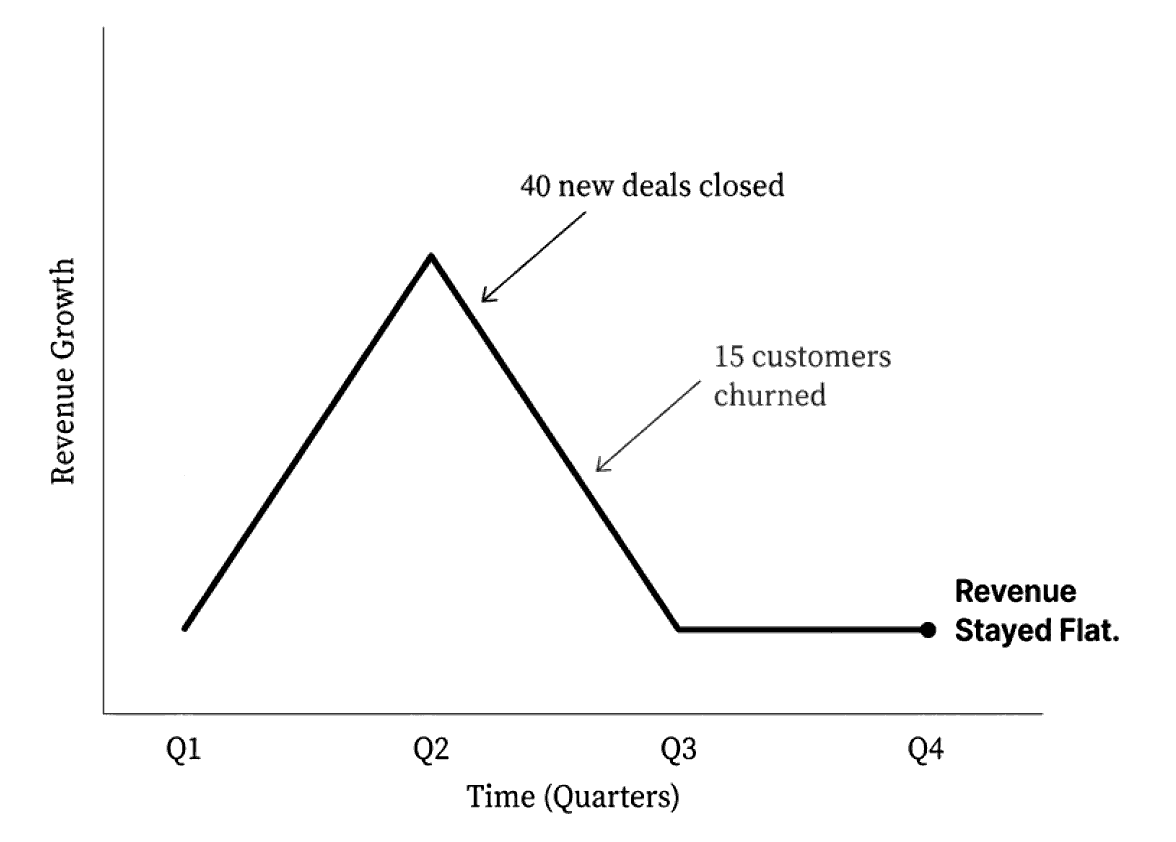
The real culprit was the handoffs. Pre-sale promised one experience. Onboarding delivered another. The product created a third narrative. By renewal, customers couldn't articulate the value they'd received because the story kept changing. This isn't a sales problem or a product problem. It's a systems problem. And it's costing companies millions.
The Content Audit Blind Spot
Most content audits count everything customer-facing: 47 blog posts, 12 case studies, 8 webinars, 200+ social posts, 40 support articles, 3 onboarding email sequences. But asset inventories answer the wrong question. The right question is whether your artifact is doing the work it's supposed to do at each stage of the customer journey.
In the case above, the company's awareness content spoke to everyone, which meant it resonated with no one. Consideration content lists features instead of addressing decision criteria. Onboarding emails existed but didn't accelerate time-to-value. Expansion guides sat untouched in a resource center. Volume wasn't the problem. System design was.
Why Content Strategies Fragment
The organizational structure that drives content creation is fundamentally misaligned with how customers experience content. Consider the typical enterprise content supply chain: Marketing creates pre-sale assets, Customer Success builds onboarding materials, Product writes adoption guides, and Sales develops their own decks because "nothing else works." Each team optimizes for departmental metrics. Each creates in isolation.
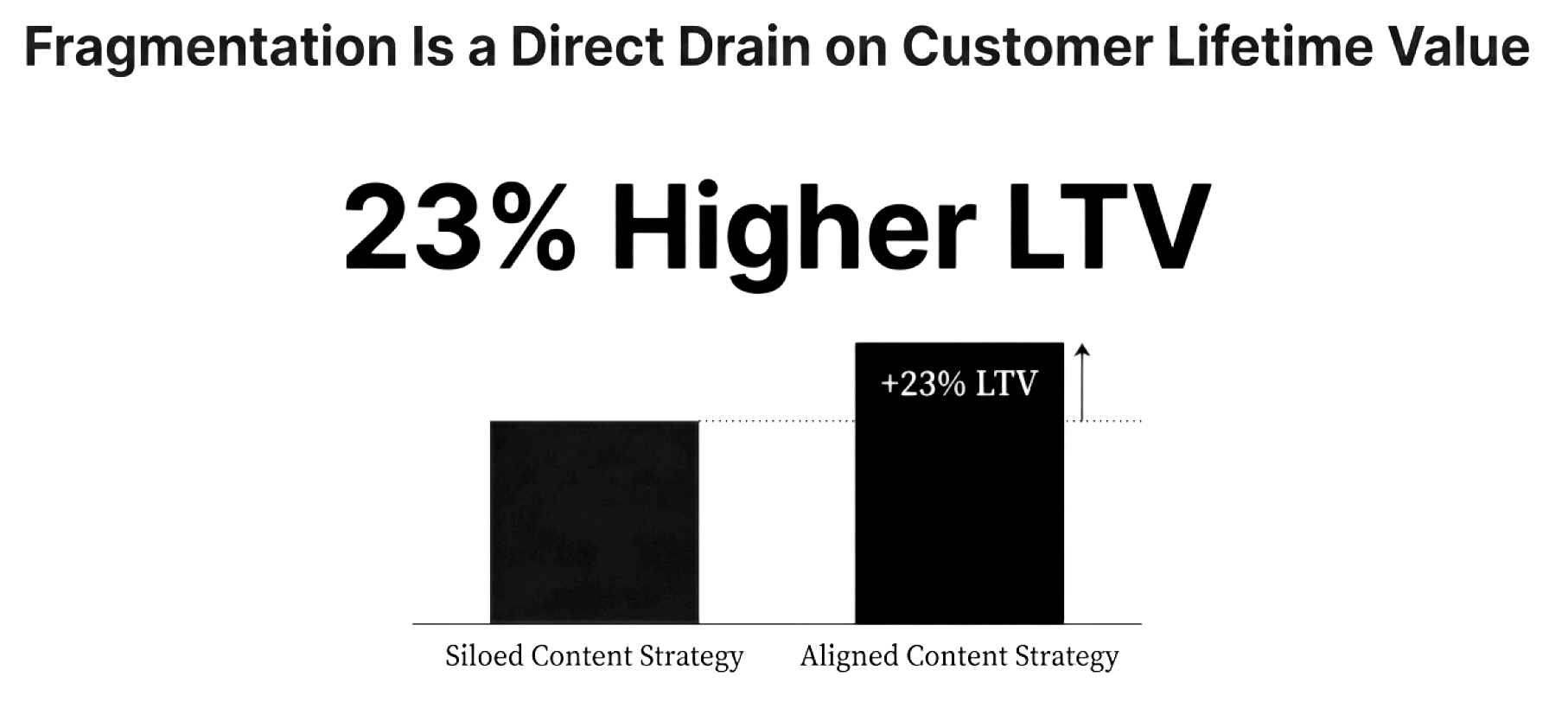
The result is a customer journey constructed from misaligned incentives and departmental silos, what organizational theorists call "structural fragmentation." This represents revenue infrastructure without architectural oversight. Research from the Marketing Science Institute confirms what practitioners observe: cross-functional alignment in content strategy correlates with 23% higher customer lifetime value. Yet fewer than 30% of B2B organizations report having integrated content governance.
Rethinking Content as Strategic Infrastructure
Think of these as customer-facing artifacts: every deck, doc, guide, video, email, and conversation script that moves someone forward. Content isn't copy or a simple video tutorial. It's the full collection of materials that bridge strategy to outcome.
The fundamental reframe is to stop treating content as creative output to be optimized and start treating it as revenue infrastructure to be engineered. Infrastructure demands clear specifications for each component, load-bearing analysis for each customer journey stage, integration protocols across touchpoints, and failure-point identification before system deployment. This isn't marketing thinking. It's systems thinking applied to marketing assets.
Consider bridge engineering. No architect designs a span without calculating who crosses it, what loads it must bear, and how it integrates with existing transportation networks. Content requires equivalent rigor. Each asset should map to a specific job-to-be-done in the customer lifecycle: reframe problem perception, educate on solution categories, reduce commitment risk, accelerate time-to-value, drive habitual adoption, reinforce realized ROI, enable expansion decisions, or facilitate advocacy behaviors. Assets that don't perform discrete functions represent inefficient capital allocation.
The Editorial Standards Gap
Before working in marketing, I trained as a journalist under Barbara Mack, a journalism education legend at Iowa State's Greenlee School. She taught that that effective communication requires answering six questions before creation: Audience definition (Who specifically is this serving?), Problem articulation (What precise issue does this address?), Temporal relevance (Why does this matter at this moment?), Contextual timing (When in their journey is this valuable?), Access mechanisms (Where can they engage with this?), and Forward momentum (How do they progress from here?).
Address all six with specificity, and you generate signal. Default to vagueness on any, and you produce noise.
Yet most marketing content defaults to vagueness. Content written for "marketers" (which specific role?), solving "challenges" (what precisely?), that matters "always" (meaning never), with generic calls to action like "learn more" or "contact us." Journalism demands precision. Marketing organizations, pressured by volume targets and channel coverage goals, often accept ambiguity. This explains why asset-rich organizations still experience revenue leakage.
The Methodology Grounded in Editorial Discipline
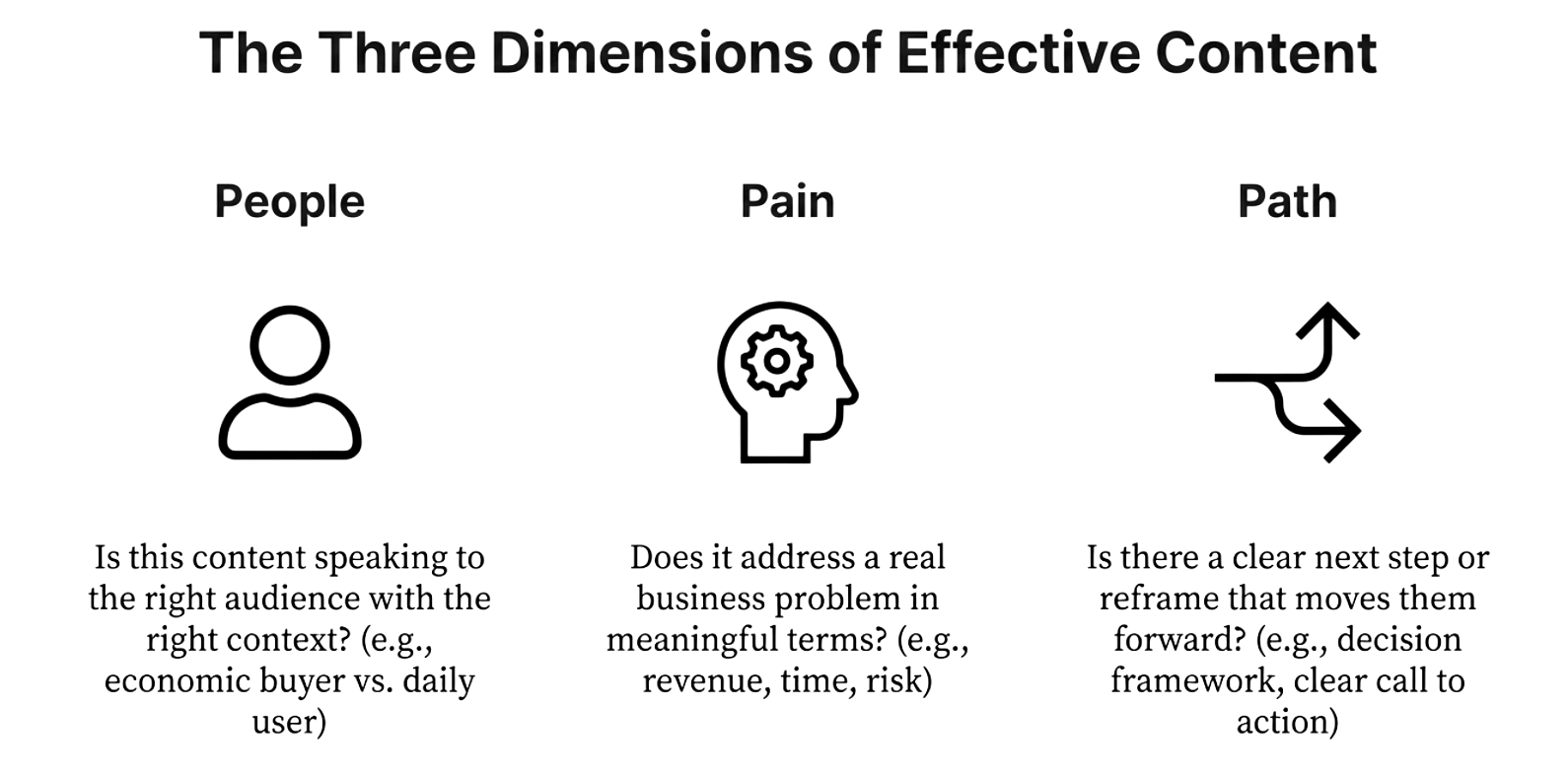
The People Dimension: Audience Precision
Effective content speaks to specific roles in specific contexts at specific moments, not broad categories. "B2B buyers" or "decision-makers" are abstractions. A VP of Marketing evaluating solution categories has fundamentally different information needs than a Marketing Operations Manager charged with implementation. Generic "marketer" content serves neither effectively.
The people dimension evaluates whether target audiences are clearly defined, whether content matches their position in the journey, and whether it addresses the appropriate role for each stage. When content fails this dimension, it generates awareness without conversion, interest without action.
The Pain Dimension: Problem Specificity
Content must address actual business problems in economic terms, not just list capabilities. "Our platform has advanced analytics" conveys technical existence. "CFOs are losing $2M annually to renewal churn they can't predict" articulates business impact. The distinction determines whether content resonates or gets ignored.
The pain dimension asks whether problems are framed in business terms—revenue, time, risk. Whether real constraints and tradeoffs are addressed honestly. Whether impact is quantified or at minimum made tangible. Features describe what exists. Pain articulation explains why it matters.
The Path Dimension: Forward Momentum
Effective content provides specific next steps, reframes thinking, or offers decision frameworks. "Learn more" and "contact us" represent abandoned opportunities to create momentum. A prospect who encounters "Here's a three-question framework to evaluate whether you need this solution category" has received something actionable. One who sees "Learn more" has received nothing.
The path dimension evaluates whether there's a clear next step, whether content shifts problem perception, and whether it provides immediately actionable guidance. When content scores high across all three dimensions, it performs work. When it fails even one dimension, it becomes noise regardless of production quality.
A New Diagnostic Approach
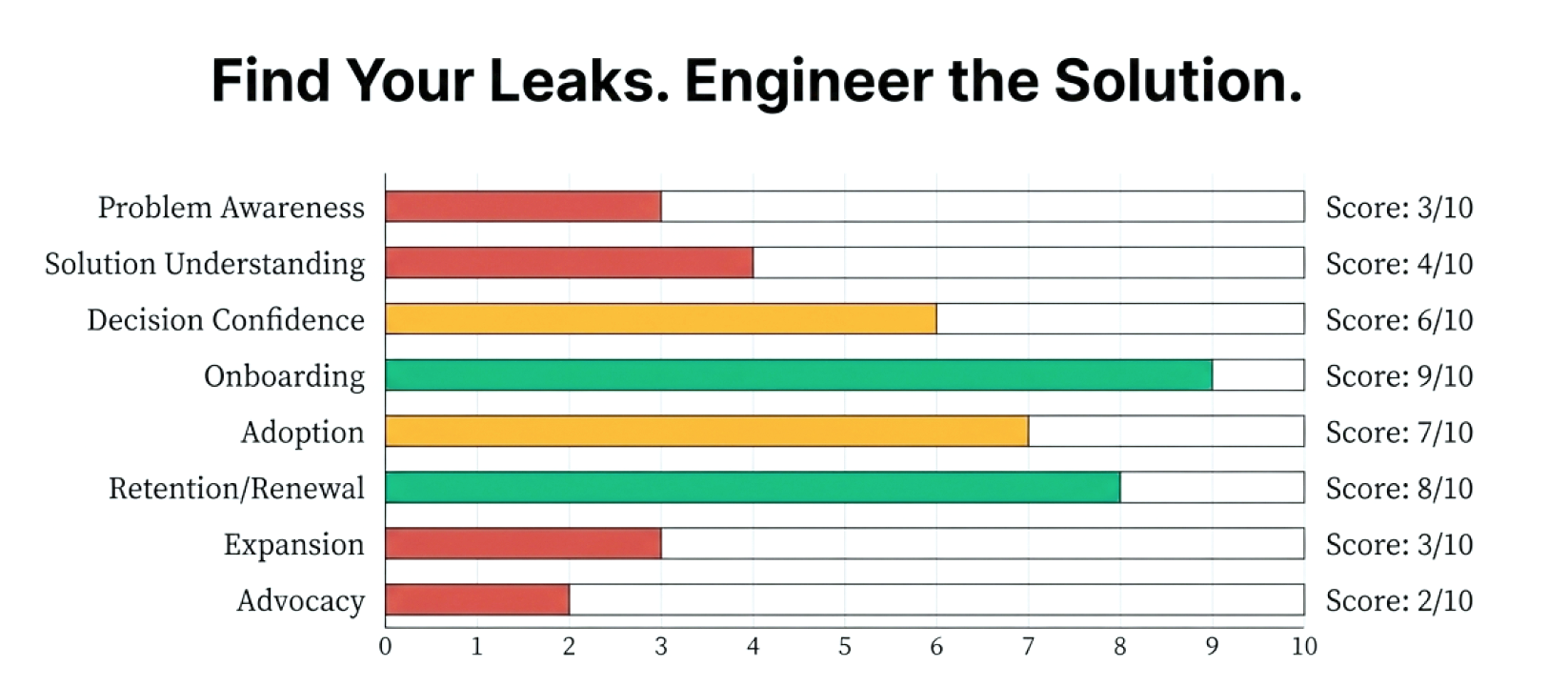
The Lifecycle Content Scorecard evaluates content across eight lifecycle stages—from problem awareness through advocacy—using a three-dimensional assessment framework. Each stage receives a score on a simple scale:
for missing
for exists but misaligned
for adequate
for strong
for best-in-class.
The goal isn't perfection. It's visibility. Where is content doing no work? Where is it doing the wrong work? Where is it missing entirely? Once you can see the gaps, you can engineer solutions.
The scorecard differs from traditional audits in three critical ways. First, it breaks pre-sale into distinct stages. Most companies lump "top of funnel" together, which obscures where deals actually stall. The scorecard separates problem awareness (Do prospects recognize they have a problem?), solution understanding (Do they know what solution category they need?), and decision confidence (Are they ready to commit?). Each stage demands different content. Each leaks revenue differently when underserved.
Second, it treats post-sale as a revenue engine. Onboarding isn't just welcome content—it's time-to-value acceleration. Adoption isn't just feature tutorials—it's behavioral change that drives realized value. Retention isn't just check-in emails—it's proactive ROI reinforcement. The scorecard evaluates whether content performs these functions or merely exists.
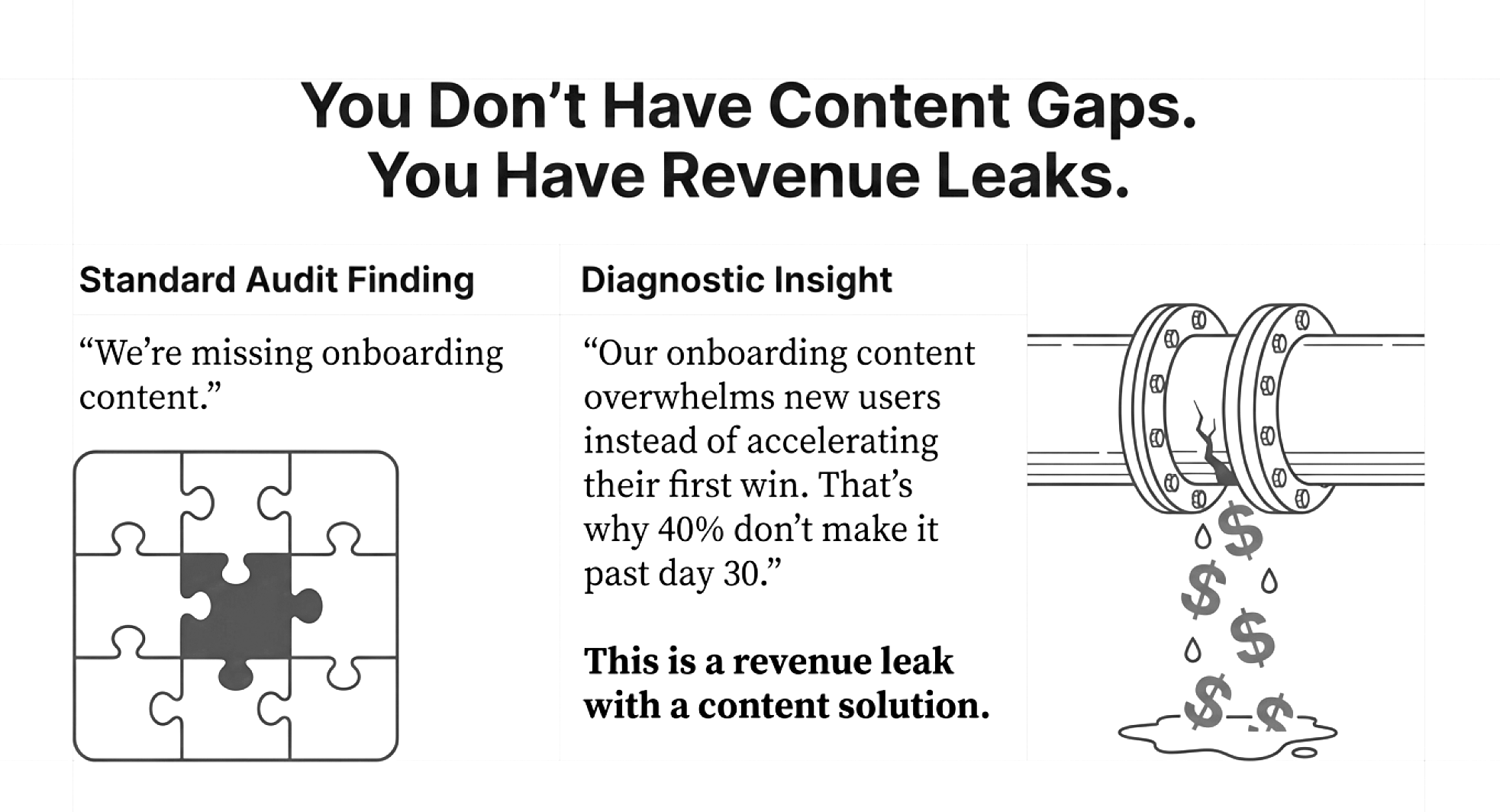
Third, it reveals revenue leakage, not just content gaps.
The AI Productivity Paradox
Organizations now possess unprecedented content generation capacity. Large language models can produce blog posts, social updates, email sequences, and video scripts at near-zero marginal cost. Yet conversion metrics remain stagnant or declining across most categories. This paradox illuminates a fundamental misunderstanding: AI optimizes for production efficiency, not strategic efficacy.
The technology cannot define precise audience segments, identify actual pain points versus assumed ones, determine whether content advances customer progress, or evaluate whether messaging aligns with journey stage. These remain distinctly human judgments requiring domain expertise, customer insight, and strategic thinking. The challenge isn't content scarcity. It's strategic clarity. What the market requires isn't more sophisticated generation tools. It's better diagnostic frameworks for evaluating whether content performs its intended function within the revenue system. The Lifecycle Content Scorecard addresses this gap.
What Companies Discover
Organizations that run this diagnostic consistently find patterns. Awareness content is too broad—generic positioning that resonates with no one. The fix isn't more content, it's more specific content. Decision-stage content doesn't address buyer concerns. Features don't reduce risk. Proof points and de-risking frameworks do. Onboarding content exists but doesn't accelerate value. "How to set up your account" isn't "How to get your first win in seven days." Expansion content is invisible. If customers can't envision the next tier, they won't upgrade. Advocacy content assumes champions will self-organize. They won't. Make it frictionless, or it won't happen.
These aren't content gaps. These are revenue leaks. And once visible, they become addressable through systematic remediation rather than ad hoc content production.
The scorecard is available as a free diagnostic tool. No forms. No gates. Use it to audit your content ecosystem. Score each lifecycle stage. Map the gaps. If the patterns are clear and you know how to address them, execute. If the scorecard reveals systemic issues you can't decode—or if you need help building solutions that scale—that's where specialized expertise adds value.
The diagnostic shows you where to look. The methodology shows you how to fix it.